


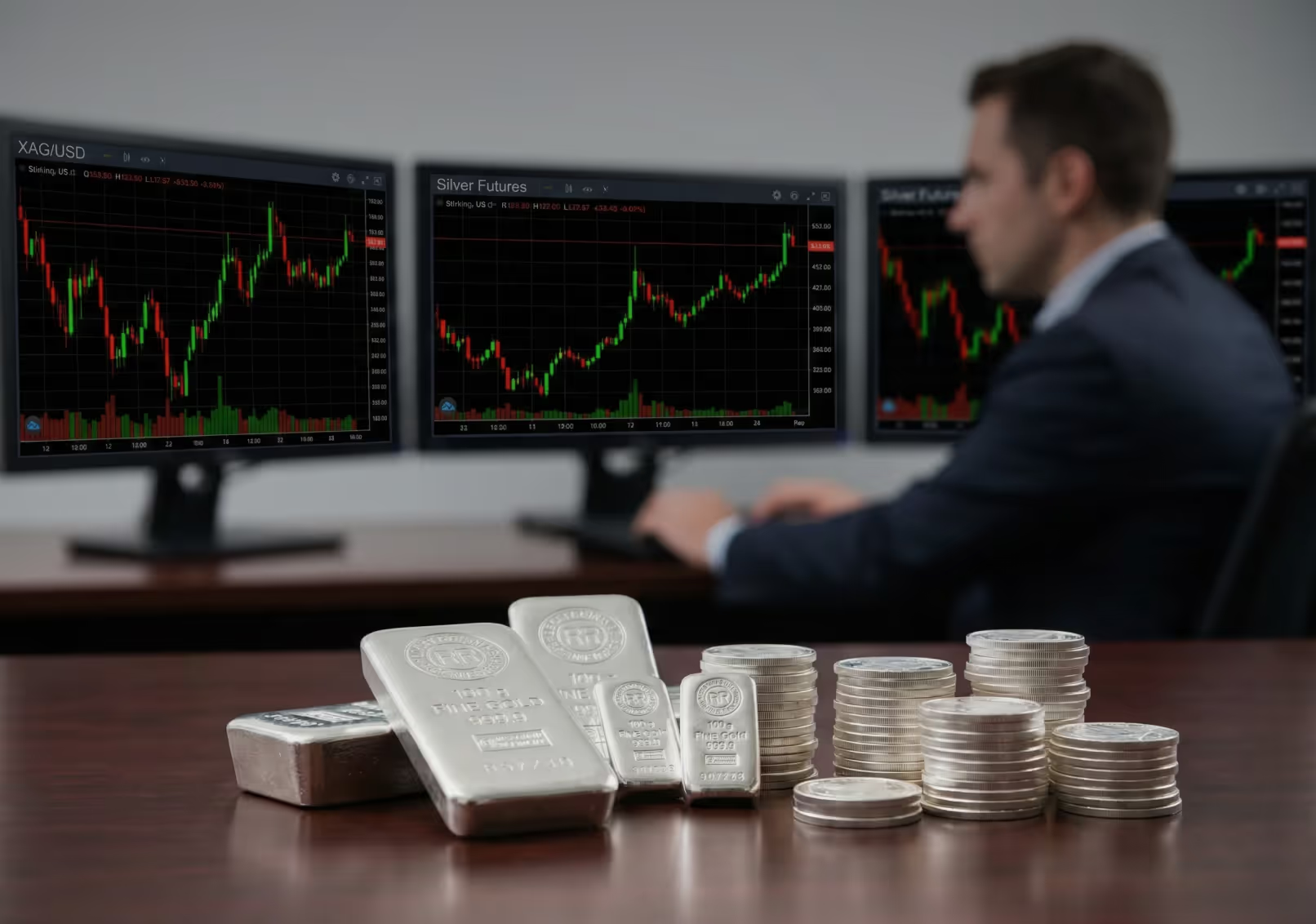
What “Silver Black Friday” Really Tells Us About thePaper Metals System
Last Friday’s collapse in silver was not just another volatile trading day, it was a window into how fragile the modern paper metals market has become.
Paper silver refers to silver that exists primarily as financial contracts — futures, derivatives, and ledger claims, rather than metals that can actually be delivered.
In less than 24 hours, silver plunged from around $120 to $78, a 35% drop that ranks among the most dramatic single-day moves in decades. What makes this episode striking is that nothing meaningful changed in the underlying supply and demand picture. Mines didn’t suddenly produce more metal, industrial demand didn’t evaporate, and there was no obvious macro shock that could justify such a collapse.
That disconnect between fundamentals and price is exactly the issue.
When Prices Threaten the System
As silver pushed toward $120, positioning in the futures market had become dangerously skewed. Large financial institutions were carrying highly leveraged short positions, meaning every extra dollar higher in price magnified their losses.
At that point, silver was no longer just a commodity trade — it was becoming a stress test for parts of the financial system.
From this perspective, the violent selloff that followed looks less like organic market behavior and more like a mechanism that relieved pressure at precisely the moment it was most needed.
A Day Too Perfect to Be Random
Several unusual things happened on the same day as the crash:
- Trading venues experienced technical disruptions during peak volatility
- Clearing participants reported operational issues at critical moments
- Margin requirements were raised again, forcing leveraged traders to unwind positions
- Important policy headlines landed right before markets closed for the weekend
Any one of these could be coincidence. All of them together? Much harder to believe.
This is why we view “Silver Friday” less as a natural correction and more as a Systemic Reset — a moment when market structure, not fundamentals, determined the outcome.
We’ve Seen This Movie Before
History suggests this pattern is familiar.
In 1980, when silver surged toward $50, exchanges intervened with extreme trading restrictions that crushed the rally almost overnight.
In 2011, as prices neared $49, repeated margin hikes forced mass liquidation even though physical supply was still tight.
Each time, institutional tools — rather than free market dynamics — decided where prices ended up.
Why 2025 Matters
When margin requirements were lifted again in late 2025, we interpreted it as a sign of internal stress rather than strength.
Once silver broke above $120, the pressure inside the paper system became unmistakable. Higher margins didn’t reflect risk they created selling pressure, allowing short positions to exit far below any reasonable estimate of fair value.
That kind of behavior protects intermediaries, but it undermines trust in the market itself.
The Real Problem Didn’t Go Away
Despite the crash, silver’s structural imbalance remains.
The market has been running annual supply deficits of roughly 200 million ounces for years, accumulating to more than one billion ounces in total. One dramatic selloff does nothing to change that reality.
What changed last Friday was leverage not fundamentals.
From Paper Promises to Physical Metal
A deeper shift is already underway.
More investors are prioritizing physical metal over paper claims. At times, physical delivery pressures have pushed traditional exchanges to their limits.
Prices can be managed. Metal cannot be manufactured.
As this trend continues, the influence of purely paper-based markets is likely to fade, while real, allocated metal becomes increasingly central.
Silver’s industrial demand remains robust, and gold’s role as a store of value is only becoming more relevant in a world of rising debt and declining monetary confidence.
Last Friday may have stabilized parts of the financial system in the short term. But in the long run, the balance is still shifting toward tangible assets over synthetic ones.
The paper market may have won a skirmish — but the broader battle is far from settled.