

The price of oil has been quite prominent in the news lately. This is primarily due to the current conflict in Iran, which began on February 28, 2026, and continued throughout March. Due to the conflict and concerns about supply, the price of oil (using the WTI futures contract) rose from $67.02 at the end of February 27, 2026 to $101.38 on March 31, 2026, which is an increase of more than 50% in a single month.
Background
The price of oil is predominantly measured by two industry-standard gauges. One is West Texas Intermediate (WTI), which is more of a US-based standard, and the other is Brent, typically used as the global benchmark.
Both are considered “light, sweet crude” oil, which is easier to refine than a heavy sour oil such as Western Canada Select (WCS), which is the benchmark price for western Canadian crude. Due to this, WTI and Brent attract a premium over the price for a heavy sour oil such as WCS.
History
Due to its status as one of the main sources of energy used around the world, the supply of and demand for oil has been a major factor in how it’s priced. The 1973 oil embargo (by OAPEC, the Organization of Arab Petroleum Exporting Countries) and 1979 oil crisis (due to a drop in production) resulted in price shocks, recession in the US and other countries, the emergence of new oil producers, and eventually the formation of strategic oil reserves in many countries (e.g., the Strategic Petroleum Reserve in the US). These strategic oil reserves are designed to mitigate the impact of future supply shocks.
Since the 1970s, oil price drivers have included actions by OPEC (Organization of the Petroleum Exporting Countries), geopolitical conflicts such as the 1990 Gulf War, financial market disruptions including the 2008 Global Financial Crisis, and the COVID-19 pandemic in 2020-2021. These events have led to dramatic spikes and falls in the price of oil.
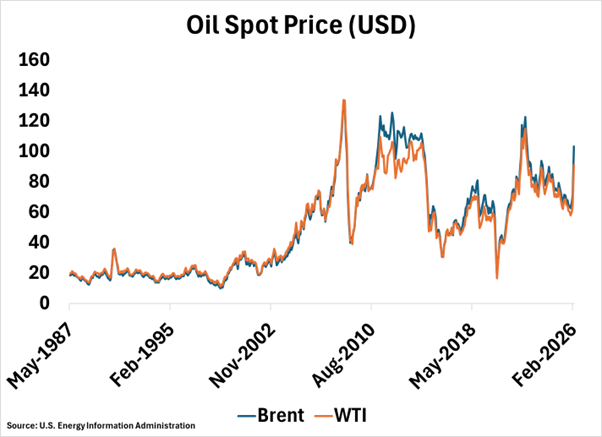
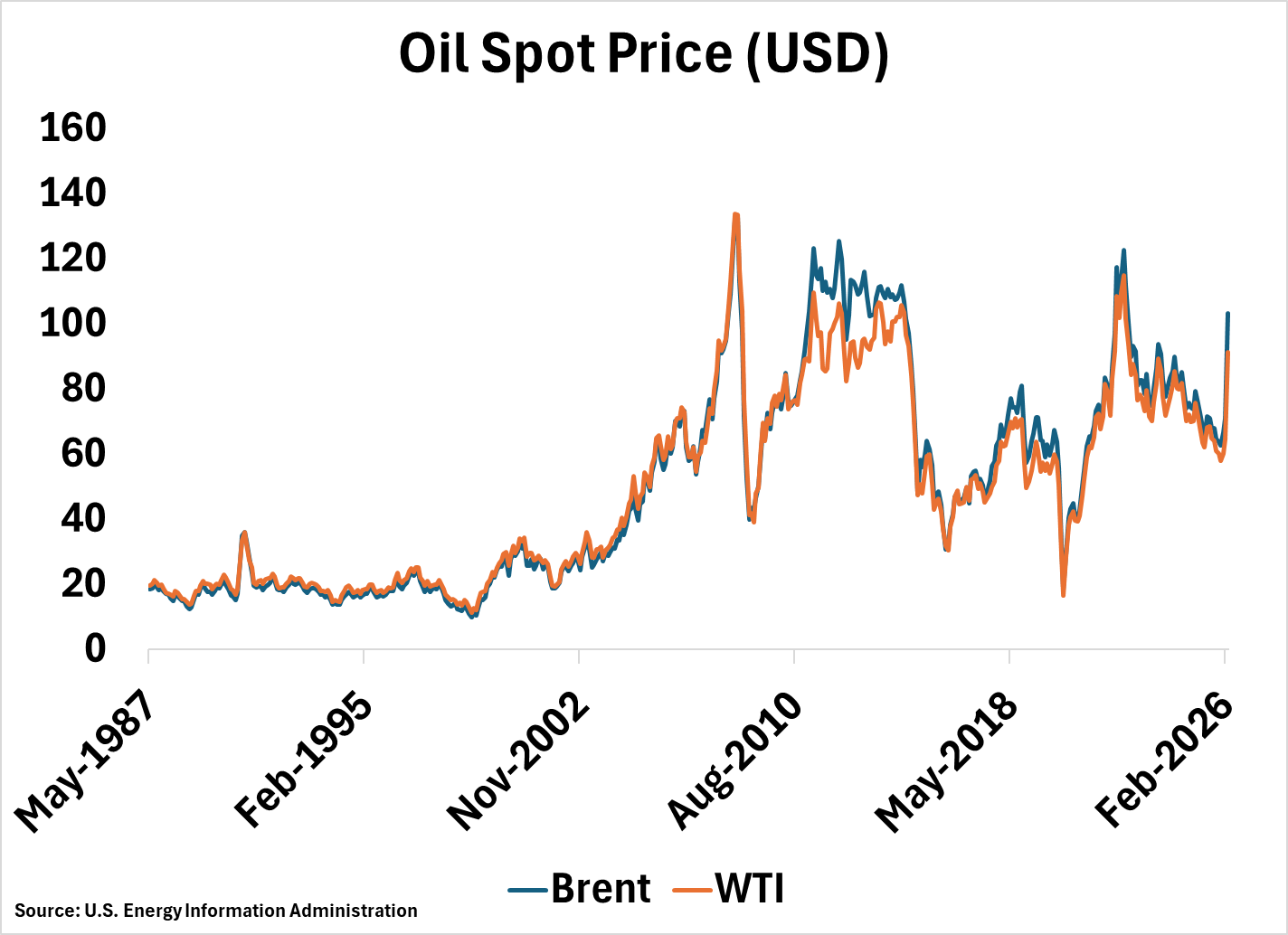
The chart below shows the spot price of oil since May 1987, for both WTI and Brent.
Brent vs WTI - recent pricing anomaly
Since the end of 2016, Brent has typically commanded a premium over WTI, due to the ease of access for Brent crude. WTI crude is produced in landlocked locations, which then requires transportation to the coasts (and hence additional costs) for shipping. Brent, however, is ocean-based, and hence, easier to access and ship.
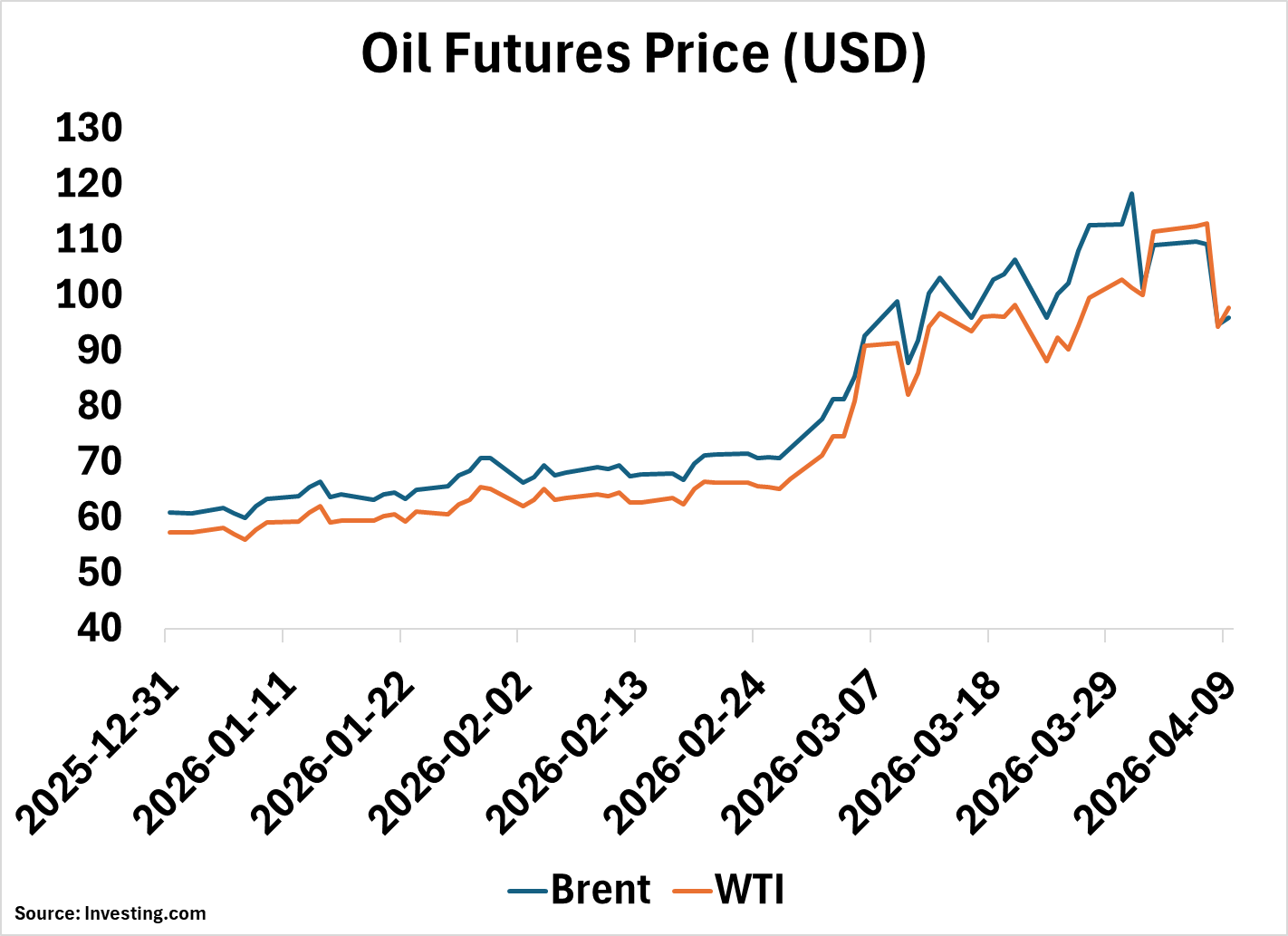
However, an interesting phenomenon has occurred during the past week: the price of WTI has risen above the price of Brent. This is shown in the chart below, using oil futures prices. The chart shows a high degree of correlation between the two oil price benchmarks, but the conflict in Iran has led to a change in the relative pricing.
The most likely reason for the pricing discrepancy between Brent and WTI is due to the closing of the Strait of Hormuz during the current conflict. Located south of Iran, the strait accounts for about 20% of the global flow of oil. As Iran controls the passage of oil-carrying ships through the strait, this has impacted the supply of Brent crude, and the now relative ease-of-access for WTI crude has resulted in its price rising above Brent.
Summary
Oil is a primary source of energy for transportation and other uses around the world. The price is influenced by many factors, not least of which are geopolitical actions in the Middle East. While there are differences between the two current benchmarks for oil - Brent and WTI - they are highly correlated and are susceptible to the same exogenous shocks and events.